

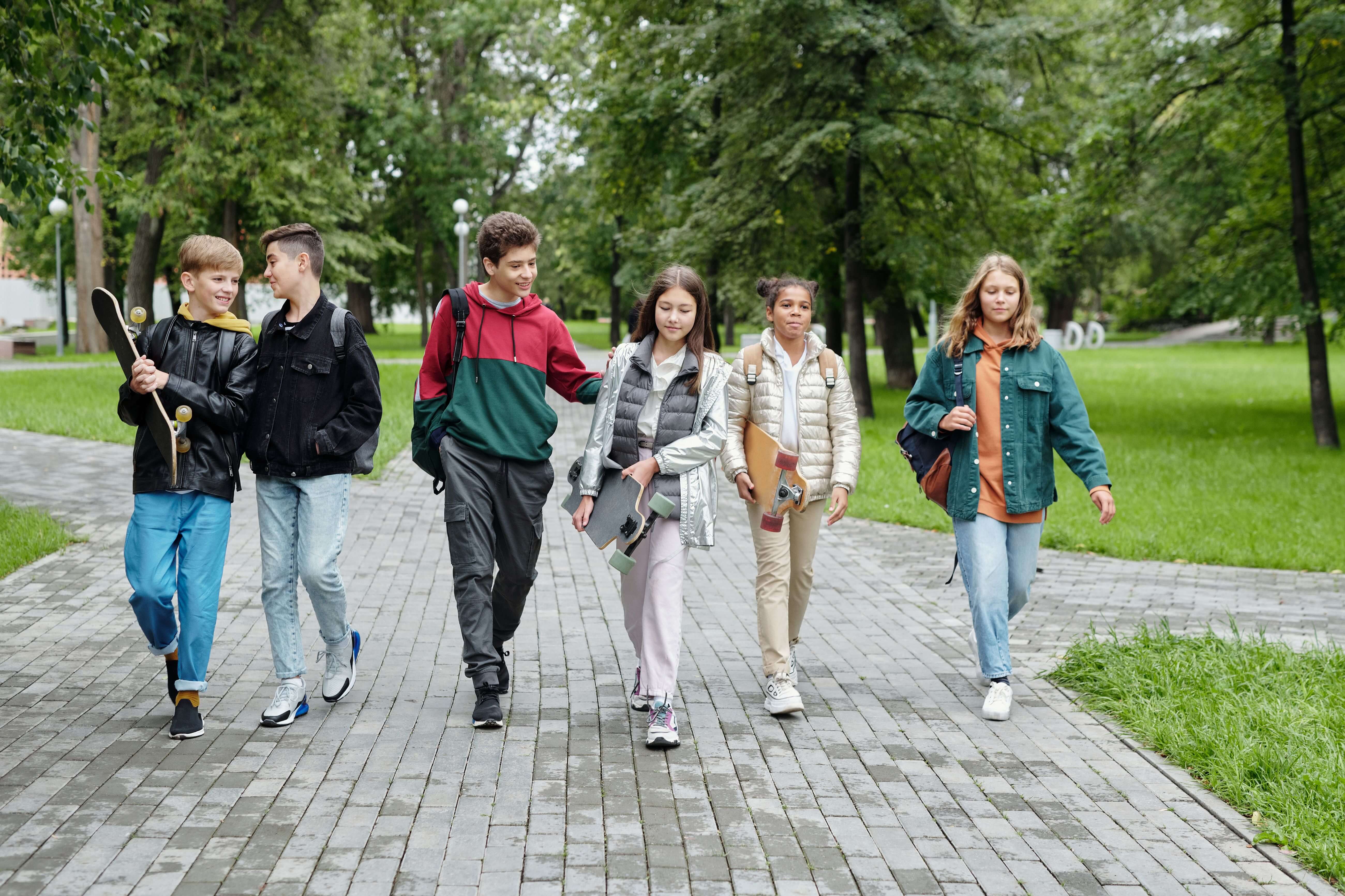
“There is a lot going on in adolescence, not only in terms of hormonal changes, but also in the development of the brain’s structure, chemistry, and synapses, which are the points at which nerve cells are talking to each other,” says Ayesha Sengupta, research assistant professor of neuroscience at Tufts University School of Medicine.
The teenage years have always been challenging, emotionally and physically. Alongside the universal struggles of adolescence, every generation faces its own set of challenges. Baby Boomers grew up during the Cold War and the threat of nuclear conflict, while Generation X experienced the AIDS epidemic and the social changes of the late twentieth century. Young people today face political turmoil, concerns about the future of the planet, and a constant barrage of information. Social media, smartphones, and artificial intelligence have transformed nearly every part of daily life. Teenagers are exposed to an extraordinary volume of information and opinion, while their own lives, choices, and appearances are subjects of constant comparison and scrutiny. How does a young person develop a sense of who they are when they are continually exposed to the opinions and judgements of others, unrealistic ideals, and images and information that may be far removed from reality?
For parents, understanding this landscape can be difficult. Many of the pressures their children experience are unfamiliar to older generations, and rapidly evolving technology continues to introduce new complexities.
The stakes, however, are significant. According to the US Centers for Disease Control and Prevention (CDC), approximately one in three American high school students experienced persistent feelings of sadness or hopelessness in 2025. In its 2023 Youth Risk Behavior Survey, 28.5 per cent of high school students reported experiencing poor mental health most or all of the time during the previous month, while 20.4 per cent said they had seriously considered attempting suicide during the previous year. These figures do not describe every teenager’s experience, but they underline the importance of taking teenage wellbeing seriously.
Most adults remember the adolescent pressures of making friends, of cliques, and trying to belong. In the past, children had a temporary escape when they came home. However, today’s interpersonal conflict can be especially difficult when there is no clear boundary between home and the outside world. Cyberbullying and social exclusion can follow a young person into their bedroom, leaving little opportunity to escape a difficult social situation. Group chats, social media, and the constant stream of feedback and comments can feel relentless. This can make it exceptionally difficult for some youth to disengage. The fear of missing out is powerful.
The challenge for parents is not necessarily to remove young people from these spaces, but to help them develop perspective and a true sense of self-worth. Children need to understand that online approval is not a reliable measure of personal value, and that the number of likes on a photograph says little about the quality of a friendship or the significance of a memory. This is easier said than done. Learning to recognise the difference is part of growing up, although it can be difficult when outside opinions are so persistent.
It is not all bad news online. According to research by the Pew Research Center, 74 per cent of teenagers say social media makes them feel more connected to their friends, while 63 per cent say it gives them a place to show their creative side. These platforms can be valuable ways to create and connect, but education, boundaries, and communication are essential in helping young people build healthy relationships with the online world.
The good news is that some things have not changed. Amid the complexities of a new and unfamiliar digital world, it is easy to lose sight of the fundamentals of parenting: communication, compassion, love, and support. These remain. The challenge is to offer guidance without dismissing the reality of children’s experiences. Adults do not need to understand every online trend or use every platform their teenagers encounter. They do, however, need to remain curious about their children’s lives and willing to listen, even when a concern seems unfamiliar or disproportionate from an adult perspective.
This begins with conversation. Asking open questions and listening before offering advice can help teenagers feel that their experiences are being taken seriously. It is also important to create an environment in which young people can discuss mistakes, online encounters, or difficult emotions without immediately fearing punishment. When every disclosure results in a lecture or a restriction, a teenager may become less willing to share information in the future.
According to data from the CDC’s National Center for Health Statistics, 76.9 per cent of parents reported that their teen always gets the emotional support they need, compared to only 27.5 per cent of teens who felt the same. This discrepancy highlights the importance of real conversation and listening.
Boundaries remain important. Agreeing on reasonable limits around phones, protecting time for sleep, and encouraging activities away from screens can help establish healthier habits. These measures are more likely to be effective when they are explained, consistent, and appropriate to a young person’s age and maturity, rather than imposed solely as a reaction to a problem. When possible, make family time an opportunity to take a break from screens. Spending a few hours together outdoors, or engaging in physical or creative activities, can help strengthen family bonds and remind children of the pleasures of the world beyond their devices.
Parents can also help teenagers develop critical thinking by discussing what they encounter online. Who created a piece of content, and why? Is an image authentic? What information should remain private? How might an algorithm influence what someone sees? These questions encourage young people to become more discerning users of technology, rather than simply relying on adults to decide what is safe.
Ultimately, adolescence remains a period of discovery, uncertainty, and growth. The difference today is that much of this process unfolds in public, under the gaze of peers and sometimes strangers. Parents cannot remove every pressure their children face, nor can they fully control the world in which they are growing up. What they can offer is a steady and safe place where teenagers feel heard, valued, and supported as they learn to make sense of that world for themselves.