
Europe is home to around a quarter of the world’s 710,000 people who collectively hold at least £22.43 million in net wealth.
The population of ultra-high-net-worth individuals on the continent grew from 146,525 in 2021 to 183,953 this year (a 25.8 per cent increase), according to the 20th edition of Knight Frank’s Wealth Report.
Figures reveal that Germany has 38,215 UHNWIs, followed by the UK with 27,876 and France with 21,528. These are the only European countries with more than 20,000 UHNWIs.
Meanwhile, Switzerland has 17,692 UHNWIs, compared with Italy’s 15,433 and Spain’s 9,186. Sweden has 6,845, while the Netherlands has 5,077 and Denmark has 4,657.
Around one in three people living in Monaco is a millionaire, with 44 per cent of residents having a high net worth. Geneva has the second-highest concentration of millionaires in the world, with 90,300 millionaires, 345 centi-millionaires, and 16 billionaires, compared with Zurich, which has 105,100 millionaires among its residents.
Liechtenstein, nestled in the Alps between Switzerland to the west and south, and Austria to the east and north, has the highest millionaire density, with around 19 per cent of households being millionaires.
Meanwhile, nearly every property owner in the affluent community of Djursholm in Stockholm, Sweden, is a millionaire in US dollars.
Due to the number of Russian oligarchs based there, Limassol in Cyprus has earned the nickname ‘Limassolgrad’. It has also become a wealth hub for technology entrepreneurs and shipping executives.
Luxembourg saw the highest growth in the number of millionaires in 2025, according to Capgemini’s annual High Net Worth Individual Report, recording a 13.5 per cent increase in the population of high-net-worth individuals (HNWIs) last year compared with 2024.
The rise is more than double the European average of 6.5 per cent.
Cities such as London and Paris are magnets for ultra-high-net-worth individuals, who seek out significant social and cultural scenes. The British capital is home to 227,000 millionaires, while the French capital has 165,000 liquid millionaires.
Christoph Houman Ellersgaard, Associate Professor at Copenhagen Business School, specialises in the study of elites and how they change, and are changed by, society. He told British American World Times that the wealthy are more closely tied to their roots than is often suggested.
He said: “If we speak of countries that would be home to the wealthiest, there’s, of course, the tax haven bracket of countries. So, as you mentioned, Monaco, you could also mention Liechtenstein or Luxembourg, where you either have a lot of wealthy people or a relatively high proportion of the workforce employed in managing people’s wealth as well.
“And under that I would also include parts of Switzerland, especially around Geneva, and London, of course, which is also a city that’s home to the [UHNW]. I think Cyprus has also been [a destination], especially for Russian oligarchs, so you would have different kinds of areas.
“Then there are also countries with a surprisingly high number of dollar billionaires on the Forbes list that would perhaps surprisingly include Sweden, where there’s a lot of private wealth, and generally the Nordics rank fairly highly in terms of the number of high-net-worth individuals.
“Then there are, of course, the places where you’re likely to meet very wealthy people at a certain time of the year, especially along the French Riviera, with Saint-Tropez and similar places.
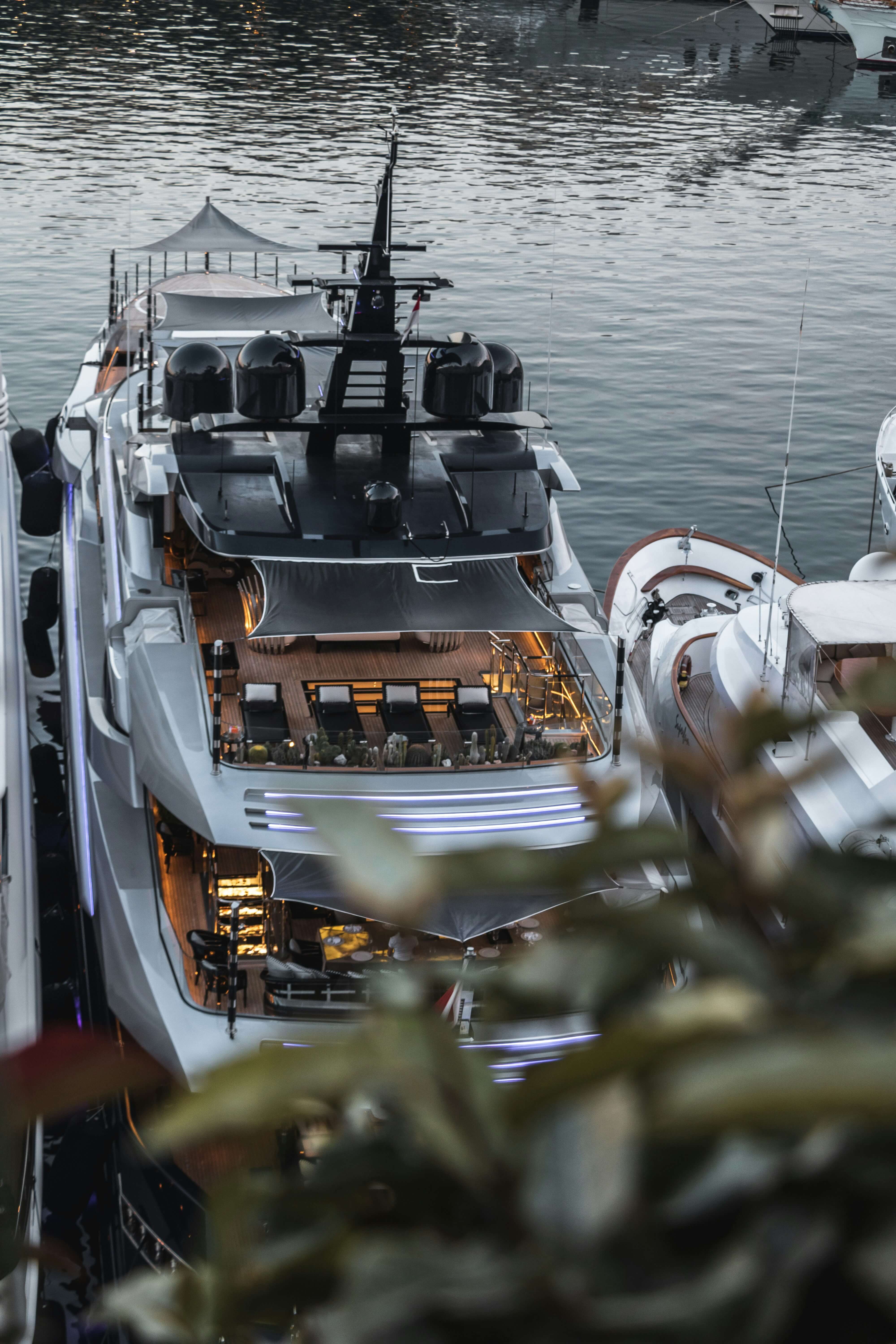
“Then there’s almost a season for elites, when lots of these [UHNW] people will gather at Fashion Week in Milan or at the Monaco Grand Prix, where the superyachts will line up and housing or accommodation prices will increase tremendously whenever a place is in season, so to speak.”
He added: “The place where, at least for me, it’s been most visible is clearly around Geneva in Switzerland, although it’s also the place I visit the most. If you stroll around Geneva Airport, half of the adverts are for wealth managers who will help you manage your wealth, so it’s very clear that there’s a huge market there.
“Wealth is also very much concentrated in Stockholm, particularly in a neighbourhood called Djursholm. A Swedish sociologist named Mikael Holmqvist has written extensively about this particular type of elite neighbourhood, not only in Djursholm but also in other parts of Stockholm.
“Elites are, to some extent, perhaps more national than the myth would sometimes have us believe, so the majority of wealth created in a country is also based in that country.”