
Collectors, dealers, artists, museum directors, journalists, enthusiasts, and everyone in between flood New York. The Armory Show is the city's largest autumn art fair, this year held, as it has been since 2021, at the Javits Center, home to Comic Con, industry conferences, and, for many New Yorkers, the site of their COVID-19 vaccination.
The name Armory, of course, carries some weight. The original Armory Show, held in New York in 1913, was a radical undertaking. Organised by the Association of American Painters and Sculptors, it introduced American audiences to European modernism on an unprecedented scale, bringing together American artists with works by Cézanne, Matisse, Picasso, Duchamp, and others. It was not a marketplace so much as a place of dialogue, debate, and intellectual curiosity.
The modern Armory Show began in 1994 as the Gramercy International Art Fair, held in the rooms and corridors of the Gramercy Park Hotel. It was, at first, something of an alternative to the increasingly established art fairs: more intimate and more willing to take risks. In 1999, after moving to the 69th Regiment Armory, the fair adopted the name The Armory Show in homage to its 1913 predecessor. It eventually moved to the West Side piers and, in 2021, to the Javits Center. In 2023, it was acquired by Frieze.
There was a time when being represented at The Armory Show seemed to carry a particular kind of validation. It was something galleries and artists aspired to. The fair was a place where collectors, curators and critics could see what galleries considered important enough to bring to New York. This year, however, the quality felt so uneven that one could reasonably wonder whether the threshold for participation has become less about what a gallery plans to bring to the fair than whether it could afford the ever-increasing booth fees. That commercial feeling was underscored by the enormous Lexus showroom in the middle of the fair.
The changing character of the fair was also evident in its gallery roster. Several major galleries that participated previously were absent this year, including White Cube, Skarstedt, Tanya Bonakdar Gallery, and Andrew Kreps Gallery. No Pace, no David Zwirner. With more than 200 galleries present, the issue was certainly not a lack of scale. If anything, it was the opposite: scale without any discernible curation.
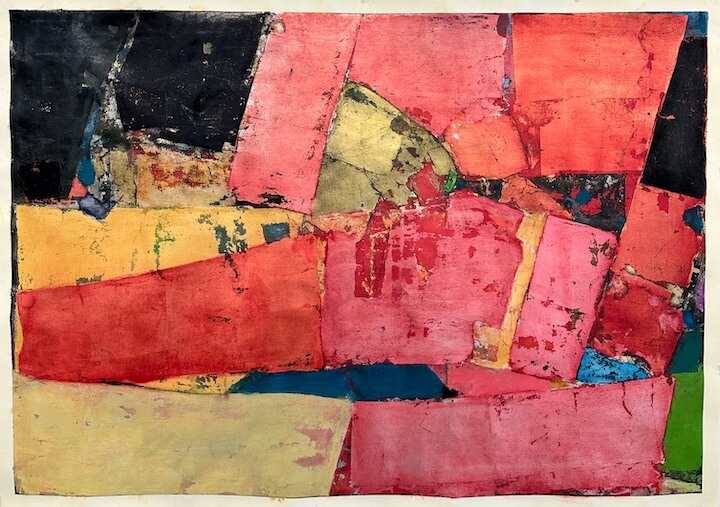
All that being said, there were bright spots. Some pieces worth revisiting included Dhewadi Hadjab’s solo presentation at Mennour, Hugo McCloud at Sean Scully, a lovely little Wayne Thiebaud at Berggruen Gallery, and some interesting oil paintings by Chrissy Angliker at Massey Klein.
Meanwhile, on Madison Avenue the same weekend, Independent 20th Century took over the former Breuer building, Marcel Breuer’s extraordinary concrete structure that opened as the Whitney Museum of American Art in 1966. The Whitney occupied the building for nearly fifty years, followed by the Met Breuer and the Frick Collection. Sotheby’s purchased the building in 2024 and opened it as its New York headquarters in 2025.
Independent was founded in 2010 as an invitation-only alternative to traditional art fairs. In 2022, it launched Independent 20th Century, dedicated to art of the 20th century.
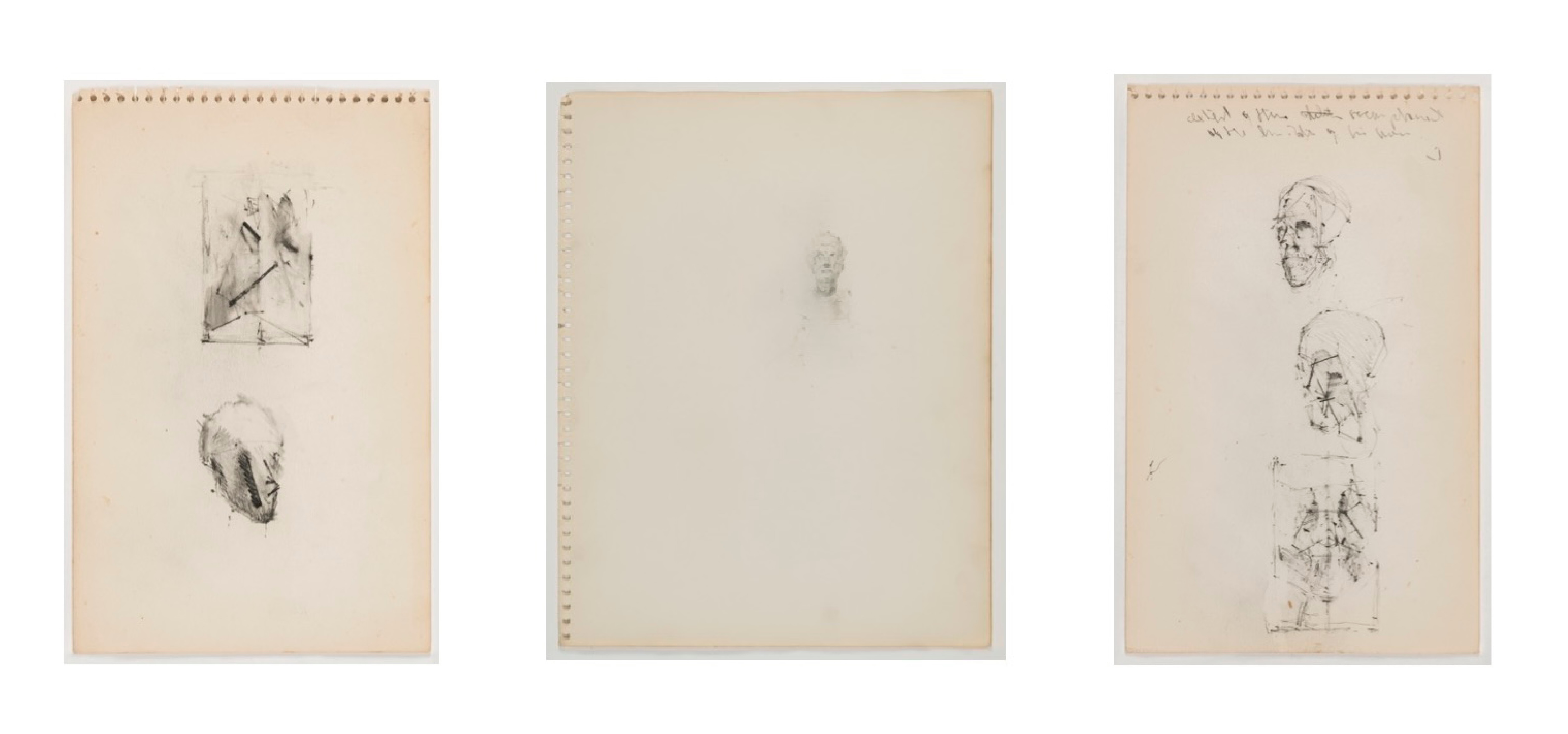
The building and layout of the space gave Independent an immediate advantage; it felt much more like a curated museum exhibition than a commercial fair. There were the expected Picassos and Kandinskys, and great ones at that, but there were also many artists who are not immediately known but certainly interesting. Among them were Marie Wilson at Gallery Wendi Norris, MANINA at Richard Saltoun Gallery, Manabu Mabe and Sachiko Koshikoku at Gomide&Co., Ubi Bava at Galatea, Mimmo Rotella at Voena, and Jonathan Silver at Nicole Klagsbrun. Klagsbrun’s choice to show Silver’s drawings, which lined a small hallway leading to a room with sculptures and louder works, may have been the standout of the entire fair. The pencil drawings, intelligent and elegantly balanced, were a bold choice for a fair given their restraint, but an excellent one.
As this article went to press, Independent announced its acquisition by London-based Informa, one of the world’s largest organisers of exhibitions and events. Although the acquisition was only publicly announced this week, the transaction had already been completed before this year’s fair, meaning that the Independent 20th Century described here was already taking place under Informa ownership.
It remains to be seen what the acquisition will mean for future iterations of the fair. For now, Independent remains a useful reminder that an art fair can be commercial without sacrificing curation or curiosity.