

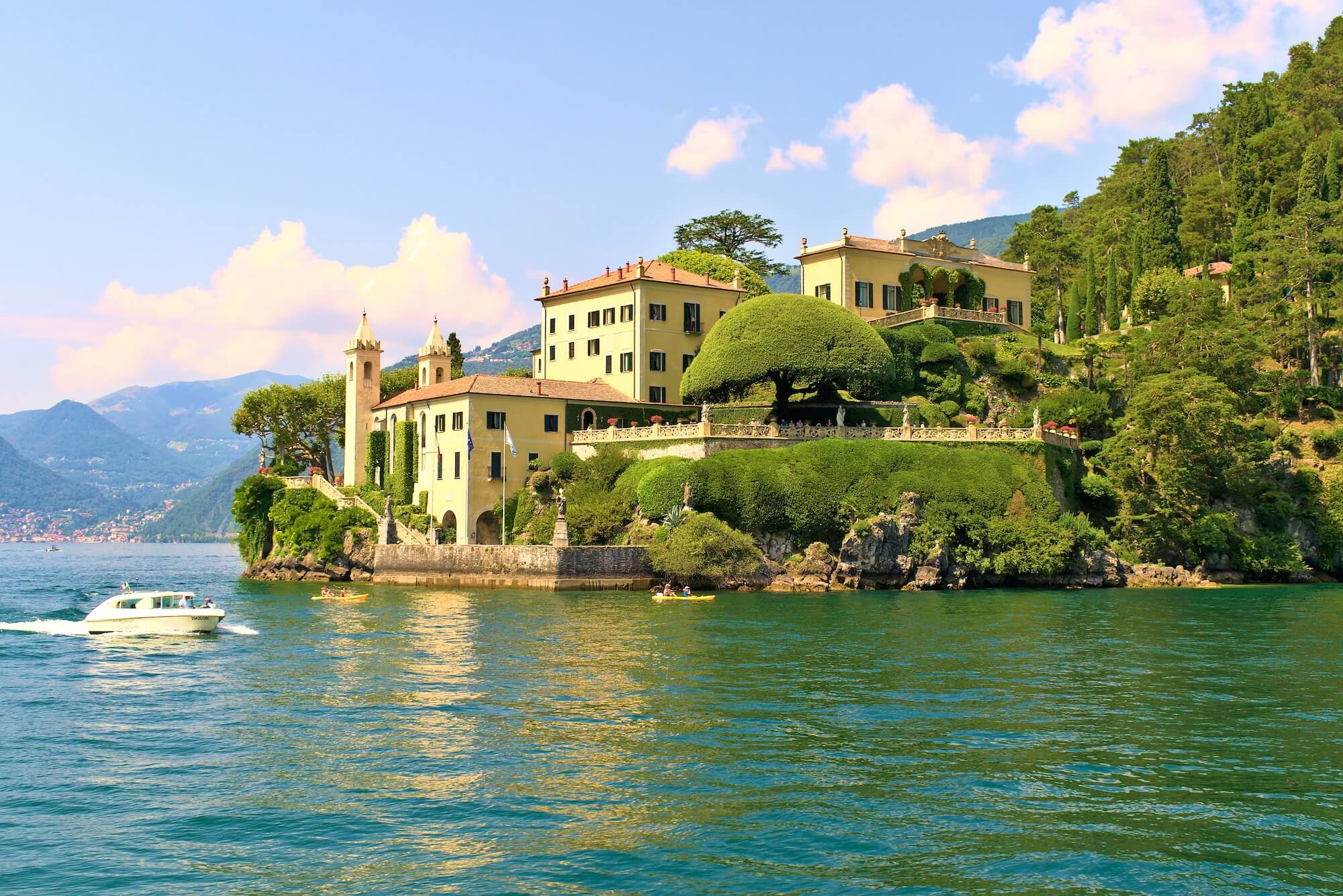
Luxury travel is often defined by spectacular surroundings: Tuscan villas, long lunches in the South of France, or luxury shopping at high altitude in St Moritz.
Yet as temperatures rise, extreme weather becomes more frequent, and scientific warnings increase, the future of even the world’s most coveted destinations is coming into question. From Alpine snow conditions to Mediterranean heatwaves and water shortages, climate change is reshaping the experience of travel, prompting visitors to reconsider not only where they go, but when.
The summer’s headlines underscored these concerns, from wildfires leading to holidaymakers being evacuated from parts of France, Greece, and Spain to severe flooding on the China-Nepal border. More recently, The United Nations Environment Programme published their Emissions Gap Report on the 14th October warning that temporarily exceeding the Paris Agreement’s 1.5°C warming threshold above pre-industrial levels is now unavoidable - although deep emissions cuts and carbon removal could still bring temperatures back down.
As summer temperatures rise, many holidaymakers are beginning to adapt accordingly, rescheduling trips to June and September, or heading north and to higher altitudes. “The cooler seasons are now getting busier, as during the high season it is often too hot,” says Michael Reece, head of brand and partnerships at luxury travel agency Berkeley Travel. The agency reports an annual growth of 5–10 per cent in summer bookings to mountain destinations, the Nordic countries, and Iceland.
Beyond the search for more reliable weather conditions, travel agents are seeing environmental pressures impact bookings on some individual holiday destinations. Reece notes: “We had a number of cancellations for Mexico’s Caribbean coast because of the seaweed [blooms] on the beaches around Cancún, the Riviera Maya, and Tulum, and the Caribbean more widely has been affected.”
It is important to note that while not solely driven by climate change, warmer ocean waters can favour the growth of seaweed. Such disruptions expose the limits of what hotels and travel operators can do. A hotel can rebuild a beach club or renovate its suites, but it cannot restore an entire marine ecosystem or safeguard a coastline.
However, it seems people are changing destinations rather than abandoning their chosen type of holiday. “Very few gave up on the trip. Most moved to the Pacific coast of Mexico, places like Los Cabos and Mandarina, or to Caribbean islands that weren’t affected,” says Michael Reece of Berkeley Travel.
In Europe, the shift appears to be less about adapting destinations and more about changing when people visit their favourite holiday spot.
Reece says client expectations are undeniably beginning to change: “A heatwave that keeps you inside until six in the evening undermines a great hotel very quickly, and clients have had enough of those summers now to factor it in before they book.”
“So I don’t think the glamorous places lose their shine. I think reliability becomes part of the glamour.”
Travel habits are changing, but whether these shifts amount to more sustainable travel is less clear.
Booking.com’s 2026 survey found that 85 per cent of respondents considered more sustainable travel important or very important. Yet choosing a cooler destination or avoiding a beach affected by seaweed does not necessarily reflect a conscious commitment to sustainability. These reactive decisions differ from deliberate choices such as selecting eco-conscious accommodation or taking the train instead of flying.
And even when people’s travel habits change, destinations are still left to tackle strains linked to the environment from water use, transport emissions, pressure on local communities, and the protection of the landscapes on which tourism depends.
In the best-case scenario, the growing visibility of climate impact is changing the vacation conversation.
Jessica Hall Upchurch, vice-chair and head of global stewardship at luxury travel advisors Virtuoso, says: “What’s encouraging is how pragmatic the conversation has become. Travelling responsibly and travelling beautifully are no longer seen as opposites. Increasingly, they are one and the same.”
According to Virtuoso, 66 per cent of its advisers say that their clients are more interested in booking sustainable travel compared to five years ago.
The challenge is whether that awareness turns into action through lower-impact operations, investment in resilience, and meaningful support for conservation.
“Responsible travel takes many forms: a hotel that champions local employment, a smaller locally owned lodge, or experiences that fund conservation, and cultural preservation. These are often simple decisions, yet their impact can be profound,” says Upchurch.
Regenerative travel takes this principle further, aiming to leave destinations better off through conservation, cultural preservation and support for local communities. Upchurch believes luxury travel can play a role in protecting the places on which it depends, making responsible choices part of the experience rather than an added consideration.
“I’ve always believed that travel can be a force for good. The opportunity now is to make these choices second nature, rather than treating sustainability as something separate or a sacrifice. The conversation is moving beyond minimising harm towards regenerative travel: leaving places richer than we found them.”
Of course the tourism industry is only able to make an impact if done in tandem with wider forces. The UN Environment Programme emphasises that sustainable tourism cannot be achieved in isolation, but requires governments and local, regional, and international stakeholders to work together to reduce emissions, protect ecosystems, and build climate resilience.
Nevertheless, the luxury sector has a role to play. Its investment and influence can help protect the landscapes, ecosystems, and communities that make these destinations desirable in the first place.
As Upchurch puts it, “The destinations that thrive will be those that preserve what makes them extraordinary while continuing to deliver exceptional experiences.”