


Cosmetic surgery is on the rise. Much of the taboo has faded away, it is safer than ever, and more people feel comfortable receiving these procedures.
The International Society of Aesthetic Plastic Surgery reported that total surgical and non-surgical procedures increased by 40 per cent from 2020 to 2025, with eyelid surgery being the most popular procedure in 2025. 85.6 per cent of all surgical and 84.8 per cent of non-surgical procedures were performed on women, with 14.4 per cent of surgical and 15.2 per cent of non-surgical being performed on men. Botulinum toxin remained the most common non-surgical procedure for men and women—among all age groups—with 7.3 million procedures performed by plastic surgeons worldwide.
However, we so often see examples of cosmetic surgery that have gone awry. The person may be healthy but they look nothing like their former selves. The key to avoiding this is to choose an excellent doctor, one who understands your desired outcome, and who has a history of achieving similar results.
We spoke with two of the best cosmetic surgeons in the U.S. about how to choose the best doctor and their advice on popular procedures. Both doctors agreed that referrals are a great place to start, and that patients should spend time talking to doctors and asking questions.They advised to avoid social media ads and to look for doctors with proven results of excellence.
Interview with Dr. David Hidalgo
BOARD-CERTIFIED PLASTIC SURGEON - NEW YORK CITY
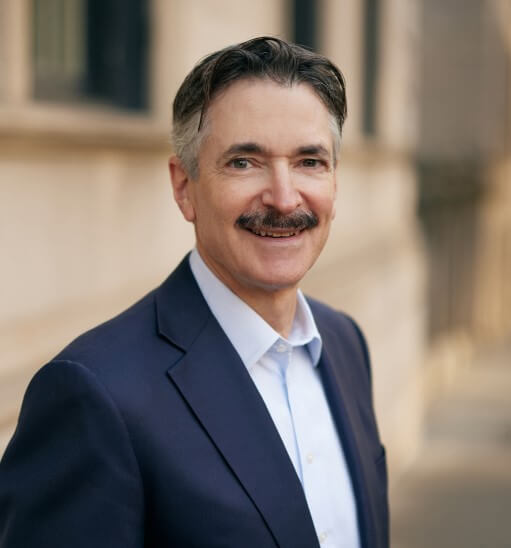
ABOUT DR. DAVID HIDALGO:
Dr. Hidalgo began his practice at Memorial Sloan-Kettering Cancer Center (MSK) as a reconstructive microsurgeon. He reconstructed the most challenging facial, breast, and body defects. He developed an innovative procedure for jaw reconstruction in cancer patients while there. This seminal work was reported in five key publications that brought Dr. Hidalgo international acclaim. He started a fellowship training program at Memorial and became the Chief of the Plastic and Reconstructive Service there. He served in that capacity for eight years before leaving to begin a private practice in aesthetic surgery in 2001.
Today, Dr. Hidalgo sees patients and operates within his Park Avenue facility that is affiliated with Weill-Cornell Medical College (New York-Presbyterian Hospital). He holds the academic title of Clinical Professor of Surgery at that institution. He is an invited expert at international, national, and regional meetings where he lectures on facial and body contouring surgery. He is a member of the American Society of Plastic Surgeons, the American Society for Aesthetic Plastic Surgery, the American Association of Plastic Surgeons, and the American College of Surgeons, as well as many regional societies.
How did you get into this profession?
I was seriously considering a career as a painter, an artist, and I decided that there was too much uncertainty there, and I liked science. So, I went to medical school. And then I knew I wanted to do surgery because it was much more closely aligned with art, doing things with your hands. I was trying to decide what kind of surgeon I would be, and originally, I wanted to be a cardiac surgeon because it was so glamorous at the time. Our training period was very exciting, but then I got exposed to plastic surgery, and I said, “This is for me”, because we go from head to toe, the entire body, and it’s very creative. I’ve been able to make some contributions that have been significant. So that’s the short story about how we got here.
What would you tell someone considering plastic surgery to look for in a doctor that signals they’re likely going to be excellent?
One of the things you want to be skeptical of is social media presentation, because physicians on Instagram are very self-promotional. Unfortunately, that’s the way a lot of prospective patients become aware of a physician. But you have to dig a little deeper. You have to look at their training: did they go to a reputable institution, and are they board certified in their specialty? I think that’s important. References from friends are very helpful if they’ve had a good experience, and particularly if you have multiple sources who refer you to the same person, it reinforces that the person is probably legit and someone you should at least see and have a conversation with. That said, I think most patients should see three surgeons and see what they say.
Do you think that most cosmetic surgeons have a specialty, or is it more of a general practice?
It has evolved over time. Earlier in my career, plastic surgeons could do the full range of plastic surgery. Today it’s become almost super-subspecialized, so that plastic surgeons specialize in almost one procedure, which is kind of a shame in terms of being a practitioner, because it’s nice to have a variety and do different things. I think the competition and economics have driven it to the point where most surgeons are single-procedure specialists, or, in the case of facial plastic surgeons, they work primarily on noses and faces. But it’s still pretty narrow.
You’ve published work on the treatment of capsular contracture. Is that your specialty, or how does that fit into your practice?
Well, that’s one of the many things that we do, and I’ve had academic interest in a couple of special problems. Capsular contracture being one. It refers to what can happen when breast implants harden, and there are a number of reasons why they would do that. It’s a frustrating problem for the patient because when you treat it, it will sometimes come back, and they get into this repeat-surgery cycle. We’ve done a lot of study on that, and we found a way to treat it that’s very effective. We wrote it up in journals and publicized it at our national meetings. That’s one specific thing that I was interested in.
Is that something women can avoid or is this an unforeseeable kind of complication?
Unfortunately, it’s kind of an unforeseeable complication. It goes with the territory, and it happens in about 5% of cases. But today we have new implants that are more resistant to that phenomenon developing. There’s been a trend in our specialty for most of us to start using that particular implant brand, but it’s not completely foolproof.
How does a woman know when she’s ready for some sort of cosmetic surgery on the face? Is there a best age to begin?
It goes by different parts of the face. For example, the eyes are really the first thing to be affected and patients usually benefit from surgery on the upper eyelids or lower eyelids or both. That typically happens in the late 30s, to early 40s. Then you see changes in the lower face - jowl formation and neck laxity - happen later. The sweet spot is usually between 55 and 65. But that being said, with social media there’s a trend to push the age younger and younger. Now I see on social media women in their early 40s having facelifts. And the truth of the matter is that very few women in their 40s need a facelift, and they’re never done as something preventative. I don’t typically operate on patients that young; I find that they don’t need it.
With something like a facelift, is that usually a one-time procedure, or do patients return for upkeep?
What happens when we do a facelift is we reset the clock, and then it starts running again. Let’s say a patient has a facelift when they’re 50. By the time they turn 70, or maybe even sooner, they may want to have another one, because they see that aging process once again, and they know there’s a solution for it. So, they’re more apt to do a second one, so it’s not one-and-done in that sense. There are procedures in plastic surgery that are one-and-done, such as tummy tucks and rhinoplasties. Those are typically one per lifetime, assuming it comes out well. With abdominoplasties there are very few redo surgeries, but with rhinoplasties sometimes there are revisions that need to be done.
Do complications increase as a patient gets older, or is it about the same as long as they are healthy?
It’s amazing - we’ll do a first-time facelift on somebody in their early 70s, and they do just as well as somebody in their 50s. It’s a person’s basic health and how well they take care of themselves. But the thing about plastic surgery is that it’s very superficial on the body. We don’t go that deep into the body, so it’s not that big of a trauma for the body to go through plastic surgery. The exception is the patients who have massive weight loss, things like big body lifts. That’s a whole different thing. But by and large, most plastic surgery procedures are very well tolerated. There are very few complications. So, going back to what you were talking about earlier, if you have the right surgeon, things are going to go pretty smoothly.
We’ve all seen celebrities or public figures in the news who’ve received cosmetic surgery and they look nothing like themselves, or simply don’t look good. Is that usually the consequence of poor technique? How does one avoid that?
Well, part of it is that plastic surgery should be invisible all the time, meaning someone looks good, but you have no idea they did something. There are surgeons who have a signature look, and for whatever reason that’s become the way they do things; that’s their brand. You can make someone look different, more surgical, as a result of that. I don’t think it’s common practice, but surgeons are very, very particular, and if they develop a procedure and they do it the same way every time, you’re going to see that sort of thing. That’s number one. Number two, yes, there are practitioners who don’t have good judgment or they overdo things. We see it all the time with fillers - women who have too many fillers. So that’s another source of that problem.
But it’s also patients who don’t know when to stop. They keep going and keep pushing the surgeon to do more. I think Michael Jackson’s nose was a perfect example. Originally, he had it done and it looked great, and he kept going and going and ended up with something that was basically a mutilated nose. So, patients who don’t know when to stop are a big part of it, too. What I would say is that most patients I see have one thing that bothers them. They’re not in this perpetual self-improvement mode. They do that one thing, and then we don’t see them anymore; it goes out of their head, they go back to their lives, and they don’t think about it anymore. That’s plastic surgery at its best. But there are some who keep coming back for different procedures.
What would you say is the most rewarding part of your job for you?
It changes throughout your career. Early on, it’s delivering what the patient wants and seeing them happy. But later on, as you progress, you develop your own standards that are, in many ways, higher than the patients’. When you’re just banging out a result, you don’t react as much. But then you do one where there was something very tricky about it that required a lot of finesse, and you did that. The patient may not even be aware of it, but for me, at this stage, that’s what gives me a lot of satisfaction: “That was a tough case,” and the patient thought it was just routine. Maybe it’s like when we fly in an airplane. We always think the flights are great, but maybe something else is going on up in the front. It’s like that in surgery too. So, the thing that gives me the greatest satisfaction is not only a happy patient, which it does, but when I’ve been able to do something very, very challenging and make it look like it was just routine.
Do you think that’s one of the things that distinguishes you from other surgeons? Do you think that high standard is what distinguishes you, or what makes your practice so strong?
I think part of it is what we talked about at the outset: the art influence. You have to be able to see things. I think you can train almost anyone to be a plastic surgeon, but at the end of the day, it’s how you see shapes and shadows and forms, and that’s number one: being able to see it. Number two is being completely uncompromising in achieving what you want. What that means sometimes is you ignore the clock; the clock drops out of the picture, and you’re sacrificing many things. Maybe you’re supposed to be somewhere at a certain time, and it just has to go out the window, because you have to become mono-focused and uncompromising. And then, of course, you need the skills to be able to do what you see in your mind’s eye. You have to be able to see it, you have to pursue it uncompromisingly, and you have to execute. Most plastic surgeons can do those things, but there are different levels.
And what would you say is the most challenging or difficult part of your job for you?
Interestingly, it’s not really the surgical challenges, because I’ve been doing it so long, and I’ve seen everything. I don’t come upon something that I’m not sure I can fix. I know I can fix it. So that’s not the challenge. The physical challenge is not it either, even though sometimes a surgery that’s supposed to be five hours can take eight. I think it’s how you deal with somebody who’s not happy with the outcome, even if it’s a great outcome. I think that’s the biggest challenge, because it goes beyond your primary skill set, which is treating the problems and executing a surgical plan. Now you’re dealing with emotions. You’re dealing with unrealistic expectations, and you want a good outcome, and you want the patient to be happy. But I think that’s true for all plastic surgeons; that’s probably the most challenging thing.
You’ve been doing this about forty years. In that time, have you seen technology and AI and things changing your practice a lot, or is it fundamentally the same?
The one constant is the human body and the anatomy, and that doesn’t change. We periodically come up with a new paradigm in terms of how to do something. For example, liposuction back in the 1980s was a new paradigm, because nobody had thought about how to do that. It came out of OB-GYN, where they used suction devices for D&Cs, and somebody had the light bulb to say, “What if we put this under somebody’s skin? Can we suck out fat?” That was a major paradigm shift in how we dealt with that. Periodically these things come up, and they go through a zealot phase where it’s “Wow, look at this,” and everybody’s doing it. Then we find out the limitations, and it settles down into a new tool in our armamentarium. But it’s not something where, if you have a hammer, the whole world’s a nail. So, through my career there have been new developments that have helped us do things better, but not so much that it’s totally different from what we were doing originally, because again, it’s the human body. We just get better at it.
I think rhinoplasty is a good example. In the old days, rhinoplasties were done just working through the nostrils, and you can imagine how limiting that is, trying to see what you’re doing by just looking in the nostril. The big change that came along was making an incision across the piece in the middle, and then making incisions so we can open up the hood of the car and see everything. That’s called an open rhinoplasty, and it changed everything, because now we can be more precise. We can see things and make changes in millimeters, whereas before you didn’t have the visibility. So, the specialty has evolved. It’s not radically different; it just gets progressively better as we understand things. The way we do a tummy tuck today is not much different from the way we did it 40 years ago.
If you look at a good result from 40 years ago, it looks the same as a good result today. Even though things may have changed, we might be able to do it quicker because there are things we can do differently that make it more efficient. But the things in plastic surgery are relatively constant. You have to understand the anatomy, have a good eye, have good hands, and you have to be obsessive about details.
Have you seen in your practice that trends are affecting what patients are asking for?
There are definitely trends, and again, social media is both good and bad. Things can go viral, as they say, and all of a sudden everybody wants to do X, whatever that is. Social media hasn’t been great in that regard, because things are encouraged that are not really good things to do. But that’s the way it is today.
What would you say is the one thing you wish the public better understood about cosmetic surgery, or one big takeaway for someone who’s thinking about plastic surgery?
I think it’s becoming more acceptable to do, but I would say that if a person has one thing that bothers them, then plastic surgery is a very reasonable way to take care of that, so that they can move on in life and not focus on it. It’s very safe today. The surgeons are better than ever; training is better than ever. But they have to do their homework, as we talked about earlier, and find the right person.
You mentioned being in surgery for five to eight hours a day. I imagine your practice is extremely demanding. So, when you get home, is your art practice demanding in its own ways? Is it a release for you? How do you balance those two things?
It’s very complementary. When I do a six-hour operation, it’s six hours, and it’s very intense. You might take a break for 10 minutes in the middle, but your brain is constantly engaged 100%, and the room for error is millimeters; there really is no room for error. Unlike a drawing, where if you don’t like it, you can throw it out and start over again, you obviously don’t have that option. So, surgery is very, very demanding. What art does, and I have a drawing that I’m working on all the time, in the city and on the weekends out in the country, in two different studios, is give me something that’s sort of intensity-light. You’re focused, you’re engaged, but you can stop for 10 minutes. You can do something else. You can send an email or do whatever you have to and return. It’s almost a form of meditation, number one. And number two, it constantly reinforces the visual skills that I use in surgery, because I’m constantly looking at shape and form, values, dark and light, how shapes relate to one another. It’s almost like doing it 24/7, whether it’s surgery or art. It’s a different side of the same thing, and that’s what works so well for me.
Interview with Dr. Bernard Markowitz
BOARD-CERTIFIED PLASTIC SURGEON - LOS ANGELES
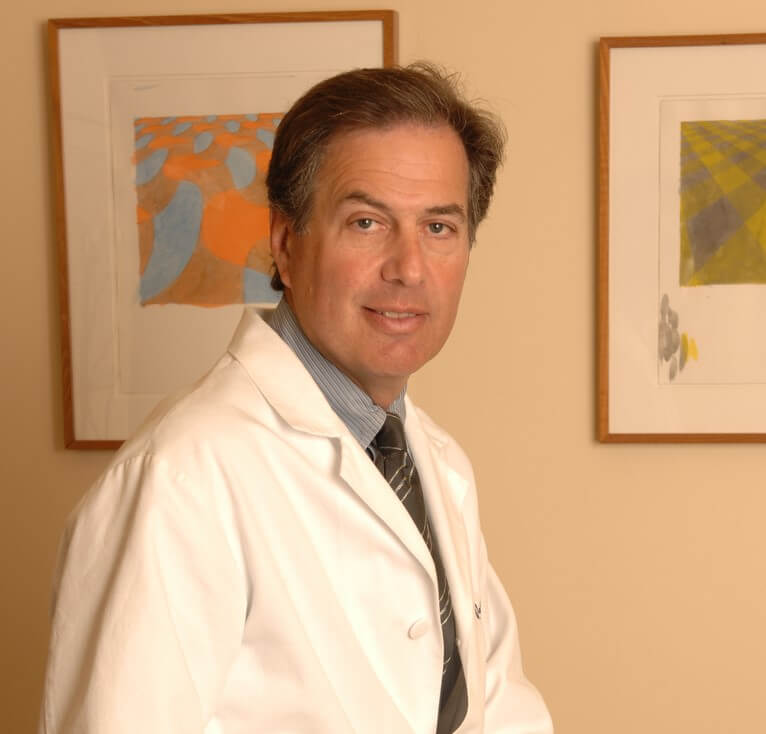
ABOUT DR. BERNARD MARKOWITZ:
Dr. Markowitz was born, raised, and educated on the East Coast. He graduated from Rutgers College in 1974 and from New York University Medical School in 1979. He went on to complete two residencies, in general surgery and plastic surgery at New York University Medical Center. He continued his training at Johns Hopkins Medical Center for a year-long fellowship, specializing in facial trauma and microsurgery. He became board certified in general surgery in 1985, in plastic surgery in 1989.
Dr. Markowitz joined the full-time faculty in the division of plastic and reconstructive surgery at the U.C.L.A. Medical Center immediately after his Johns Hopkins University fellowship in July 1987. Dr. Markowitz’s tenure at U.C.L.A. is noteworthy given the unusual fact that he became renowned for his work in both the reconstructive and aesthetic fields. His work with congenitally deformed children, head and neck cancer patients, and facial trauma patients is widely regarded by both his patients and his peers. Simultaneously, he pursued a noteworthy practice in elective cosmetic surgery, where his innovative techniques and results created a successful private practice. Though Dr. Markowitz left the academic world as a full professor after thirteen years, he remains on the clinical staff and continues to perform surgery and teach at the institution.
How long have you been performing cosmetic surgery?
Over 40 years. Cosmetic surgery is part of a plastic surgery resident’s curriculum. I was exposed to it as a junior plastic surgery resident in 1985, assisting the attending surgeons at NYU. I had my own cosmetic surgery clinic as a chief resident at Manhattan Eye and Ear Hospital in 1986. As my practice matured at UCLA in the 1990s, my aesthetic practice expanded. I left the full-time faculty in 2001 and entered private practice in Beverly Hills. Subsequently, my practice focused on cosmetic surgery.
Why did you choose this line of work?
Simply stated, I like making people feel better about themselves. I am thrilled to improve someone’s self-image by making significant but subtle changes to their face and body. I always aim to rejuvenate and restore.
What do you consider your specialty?
Aesthetic Plastic Surgery. The most common operation I perform is a facelift, followed by surgery of the eyelids, nose, breast, and abdomen. I have extensive experience reconstructing diverse parts of the body from both my academic years at UCLA and private practice.
What makes you one of the best cosmetic surgeons in the US?
My patients will have the best feedback on that question, but I must give credit to my training and mentors. They were top notch. I also take a very individualistic and personal approach to each surgery so that the results are tailored to the needs and anatomy of that individual. I am not a one-size-fits-all surgeon where I have a “look” that defines me. That personalised approach that goes beyond a single, stylized approach suits my patients.
What questions should a potential patient ask the cosmetic surgeon?
The most important aspect of a patient’s primary consultation is determining if you are comfortable putting yourself in the surgeon’s care. You need to figure out if this is the person you are going to trust with your face or another body part you seek to enhance. If you do not know anything about the surgeon, ask him about his credentials. Where did he go to medical school, do his residency, is he/she board certified, if so in what specialty. Ask about their surgical experience. Always ask about the risks and complications of the procedures you’re interested in, how often they occur in general and in the surgeon’s specific practice. If a surgeon says they never have problems, cross them off your list. The only surgeons who don’t have complications don’t operate. Ask about the procedures they recommend for you, why they’re recommended, and alternative options. There are hundreds of appropriate questions to ask so don’t be shy doing so. An educated patient is a good patient.
What answers should they expect from a top-notch surgeon?
The patient should expect open, honest, and educational responses. The consultation should feel like a conversation, not a one-way lecture on what you should do, and how you should do it. You should not feel rushed or intimidated by the doctor’s presence. The doctor should put you at ease and make you feel comfortable. You can discern someone who is confident with their recommendations and has your best interests at heart, versus someone selling you a list of techniques.
How can a patient differentiate between a good surgeon and an excellent one?
This is a layered answer, as there is a great deal of subjectivity to it. Cosmetic surgery is results driven. What is considered a good result for someone might be experienced as a great result by someone else. Asking friends who look terrific who their surgeon was is a tried-and-true method. Another good indicator is to evaluate your time with a surgeon in consultation and assess if you trust their presentation and aesthetic judgement.
What red flags should a patient look out for when speaking with a potential surgeon?
Patients should do their homework before scheduling a consultation. They can ask their other medical professionals about the surgeon’s standing within the community. The state medical board is a good source to investigate a doctor’s record.
Be cognizant of the office staff, their appearance and demeanor. If they look “done” this might not be the place for you. If you feel pressed by the consultant to schedule immediately, take a deep breath and let them know you will call after you had some time to evaluate and discuss surgery with your significant other.
I understand you work mostly through word of mouth. Why did you choose not to market yourself like some other celebrity surgeons have done?
I have never been much of a self-promoter. I am comfortable letting my work speak for itself. Developing a patient and physician-based referral source takes longer but is much stronger and self-sustaining than any marketing platform I am aware of. It also selects a patient base with a common goal; looking better not different, refreshed, not done. My patients aren’t the sort who shop for medical care on social media. They want a private, discreet, and personalised approach to their care that prioritizes the best aesthetic results they can achieve outside the realm of social media. For me, the patient is the star not a media feed.
Do you take a patient’s psychological state into account when judging whether they are a good fit for a procedure?
Absolutely. If a patient is not in a positive place, the surgery experience will be more challenging. Surgery, no matter how well it goes, can be stressful. I advise patients who are recently divorced, still mourning a loved one, or getting over another significant life trauma, to wait until they are in a good emotional state before contemplating surgery.
Should patients consider cosmetic surgery as a one-time event or as an ongoing approach to aging?
This is truly dependent on the individual, their age, health status, occupation, goals, and expectations. I have operated on patients in their late 40s three to four times to address facial aging over 35 years. If I see a 70-year-old they are more likely to have one operation and pursue non-surgical procedures for upkeep.
What is the oldest a person can be to have cosmetic surgery and why? Is it ever too late to start?
Age alone is not the sole determining factor in cosmetic surgery. I have operated on 80-year-olds and have advised against surgery for 60-year-olds. The octogenarian was healthy and realistic; the sexagenarian had a serious chronic illness.
I make certain all patients are medically cleared for surgery by an internist, with particular attention to those over 75, limit operating room time, and do not bundle operations in older individuals.
What makes you such a top-notch surgeon? I understand you are meticulous and very detail oriented. Does this mean your surgeries take longer?
Excellent surgeons have a keen understanding of the anatomy they are tasked to improve. They are meticulous, precise, and respect and know how to manipulate the tissue they operate on.
Surgical time depends on the complexity of operation performed and what the patient and surgeon strive to achieve. I approach every surgery with the utmost care and take the time the procedure requires to get the best result I can create. My surgical technique honors the result, not the time it takes to achieve it.
Do patients frequently travel from other states or countries to see you? If so, how does that change their approach to recovery?
I do have many patients that travel to Los Angeles for surgery with me. We have a protocol of when they should arrive prior to surgery and then, depending on the procedure, there is a window of post-operative care in town. Subsequent to that, we do follow ups on zoom. Most return to the office for a check-in over the course of a few months.
You spent many years working on children with birth defects, like cleft palate issues. What was that experience like?
I loved cleft surgery. Being able to successfully treat an ostracizing deformity changes these children’s lives. The operations performed embodied the specialty of Plastic Surgery. In essence, the premise of these procedures was based on one of the tenets of our specialty; moving tissue from where it wasn’t needed to where it was in order to correct a functional and aesthetic deformity.
Did that experience improve your abilities with cosmetic surgery?
Absolutely, as did my experience reconstructing composite head and neck cancer defects using microvascular techniques, and repairing complex traumatic facial injuries.
You are renowned for always delivering a very natural result. How do you do this? What techniques do you use to ensure the results are so natural?
It has to do with technique, the way the layers of the face are repositioned and restored. Each patient presents their unique anatomic challenges which I address using superficial and deep solutions. I recreate contour by restoring volume where it is needed and reducing it where it is detrimental.
When you see individuals who have had way too much surgery or look “botched”, what do you think is the cause?
Interesting how the term botched has permeated our vocabulary since the advent of the show. Most people think “botched” patients occur after untoward or too much surgery. While that is correct in many instances, overuse of fillers and other non-surgical procedures can create these unusual outcomes as well.
Perhaps the most important thing to consider when evaluating a surgeon and who might do a procedure or surgery is judgment: Does this person have personal and aesthetic judgment that lines up with your wishes and expectations?
Do you ever work on patients who have received a surgery elsewhere that they are not happy with the results of?
I definitely operate on patients who have had “complications” and would benefit from additional surgery. The surgery performed and its timing is determined by the “complication” encountered. The most common reason for early secondary surgery isn’t a true complication, it’s subsequent to patients not achieving the result they expected. As surgeons, we feel obligated to address our own complications. If the primary surgeon is reputable, I counsel the patient to have the issue addressed by them. If they are uncomfortable with or lost confidence in the surgeon, I will manage the issue at the appropriate time, primarily when scarring has resolved. Patients should understand the surgeon is unable to completely control the soft tissue (skin, fat, and muscle), manipulated during cosmetic surgery. It is the surgeon’s skillset and quality of the tissues together that determine how it heals and influences the longevity of the result.
What is the most rewarding aspect to your work?
Happy, appreciative patients. Restoring an individual’s self-image is a phenomenally powerful accomplishment.
What is one thing you wish the public better understood about cosmetic surgery?
Great question. The human body is fascinating with its functionality, resilience, and ability to heal. It’s important people understand cosmetic surgery requires a deft touch, extensive training, and experience. There are many doctors attempting non-surgical and surgical cosmetic procedures that may be ill trained to do so. Some of the simplest procedures can lead to devastating complications. Be certain to do your due diligence and find a cosmetically trained Board-Certified Surgeon to work with.